

Category — Sustainable Forestry
US rejects genetic engineering in eucalyptus trees
US rejects genetic engineering in eucalyptus trees
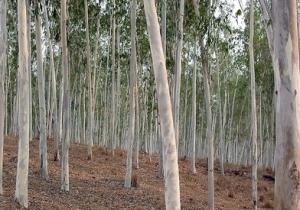
The US public have rejected the possibility of genetically-engineered eucalyptus trees, giving more weight to the sustainable development option.
We were pleased to learn that the vast majority (99.99 percent) of people questioned during the USDA APHIS public comment period were against the legalisation of genetically engineered trees.
Genetic engineering (GE) has been considered as an option to help supply the demand for more timber and cheaper costs. A similar situation has taken place within the food industry where ongoing pressure mounts against farmers to provide more for less.
This particular vote was in relation to a petition by GE tree company ArborGen, which had requested permission to commercially sell their GE freeze tolerant eucalyptus trees.
Anne Petermann, global justice ecology project executive director, and coordinator of the campaign to stop GE trees, remarked that "the people of the US issued a firm demand to APHIS to reject, invasive, flammable GE eucalyptus trees".
This issue has come to light in the US but GE trees are a concern in other areas around the world. Rural communities in Brazil have been particularly keen to keep such trees out of their forests, while the UN Convention on Biological Diversity has warned countries around the globe of the social and ecological dangers of GE trees.
But eucalyptus has a wide variety of uses and is an essential crop for biofuel production, as well as paper production and raw use. This has helped it to become the most commonly developed commodity pulp lumber in higher rainfall areas throughout the world.
Brazil, however, remains one of the most productive ecosystems for growing eucalyptus and between the 1990s and 2005, Brazilian exports of the product rose from $1 billion to $3.5 billion.
We've been working hard to capitalise on this investment potential, while maintaining a sustainable model for the future. This involves considering the high yield opportunities in Brazil alongside the country's ecosystem and local communities to provide a future that doesn't require the genetic modification of trees or the abuse of land systems to turn a healthy profit.


May 7, 2013 No Comments
Greenwashing is no longer an option
Greenwashing is no longer an option
Sustainability is one of Greenwood's key areas of focus; we're keen to prove that it's perfectly possible for ethically-minded investors and businesses to turn a profit while supporting sustainable growth and the environment. But this approach to business is still in its infancy; although some people cottoned on to the possibilities years ago, it is only recently that sustainability has become important on a grander scale.
With this in mind it is interesting to learn that companies are still struggling to find the right way of approaching the matter. For example, a recent announcement from ForestEthics revealed changes in the way people see the Sustainable Forestry Initiative (SFI). In fact, a total of 24 prominent brands have decided to move away the scheme, including AT&T and Allstate. Aaron Sanger from ForestEthics observed: “For major brands, as for ForestEthics, SFI is not environmental leadership.”
The group went so far as to suggest that the organisation is 'greenwash' – a term coined to describe the marketing practice of using green credentials to deceptively promote the perception that an organisation or company is environmentally friendly.
The main fault levelled at the scheme by ForestEthics is that it is too dependent on the industry it serves, which means that it doesn't always deliver for forests.
We believe that schemes like the SFI do go some way to promoting sustainable growth. But it's vital that they aren't the only approach being employed and they need to be carefully monitored. We're keen to see more work take place at the other end of the system to ensure that new plantations are able to provide a sustainable source of timber for the growing industries in and around Brazil, as well as those further afield. With these plantations also turning a profit for investors, the system looks set for secure growth with benefits in place for investors, the environment and timber buyers.
But it is essential that businesses get past the concept of 'greenwash'. Sustainable industry is fast becoming the only way forward - it is vital if our economies are to prosper. Glossing over this need with false marketing is simply not an option.
May 3, 2013 No Comments
Is EU demand for Brazilian exports perpetuating Amazon deforestation?
Is EU demand for Brazilian exports perpetuating Amazon deforestation?
A recent report has highlighted the interconnected nature of the modern marketplace and the importance of ensuring that products are sourced sustainably wherever possible.
Compiled by the Center for International Climate and Environmental Research (CICERO), the study found that while Brazil is working internally to slow down the deforestation in the Amazon, Western demand for products is making this a difficult task.
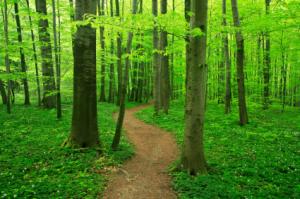
The European Union is a supporter of the UN programme of reducing emissions from deforestation in developing countries, but it also appears to be demanding more and more products derived from Brazilian beef and soybeans, both of which have been cited as a contributing factor to deforestation in the Amazon region.
In fact, the report estimated that carbon dioxide emissions caused by deforestation in the Brazilian Amazon between 1990 and 2000 correlated with deforestation driven by the demand for more land resources for cattle and soybean cultivation.
The solution to the conflict of interest is not going to be simple. An email from European Commission Climate Spokesman Isaac Valero-Ladron to EurActiv read: “The Commission and EU Member States are fully aware of this issue and have raised it in the context of their participation in leading international negotiations and initiatives.
“Trade restrictions however do not seem to be a viable solution: They could quickly hamper development and be deemed incompatible with World Trade Organisation rules. Instead the Commission and other governments (US, UK, Norway) seek solutions together with the private sector on the supply side: Public support could be granted for developing or promoting labelling schemes for sustainable ('deforestation-free') agricultural production, for example in Brazil.”
While Asia now accounts for a greater percentage of carbon emissions linked to beef and soybean exports from Brazil, Europe still makes up around six per cent of Brazil's exported emissions from beef to European consumers.
It's clear that a commitment to an approach that facilitates both fair trade and sustainability is needed. We believe that the development of sustainably managed forests is an important phase in meeting this end because it provides local communities with security and viable alternatives to the exploitation of their environment.
March 11, 2013 No Comments
Sustainable plantations to play important role in meeting growing timber demand

Global consumption of wood from forests and plantations is expected to triple by 2050, according to a new report from environmental charity WWF.
The Living Forests Report, which was presented to delegates at the Paperworld industry conference in Frankfurt on Monday 28 January, endorses the use of renewable timber from well-managed forests and plantations for the production of renewable energy. Wood consumption is also expected to rise due to general population growth, demand for sustainable building materials and even paper.
Rod Taylor, who heads up the WWF’s Global Forest Program, explained, “Wood, if sourced from well-managed forests or plantations, is a renewable material with many advantages over non-renewable alternatives.”
He added that the expected increase in demand means that ensuring forests and plantations are managed sustainably has become even more important and regulation and stewardship needs to reflect this: “A scenario of tripling the amount of wood society takes from forests and plantations needs to motivate good stewardship that safeguards forests - otherwise we could destroy the very places where wood grows.”
The report outlines the challenges that lie ahead for the timber and forest sector. Finding ways to increase production of timber without harming the environment is one such challenge. Planting and managing sustainable plantations in regions where natural forests are vulnerable to deforestation is one solution.
Greenwood Management’s plantations of non-native timber varieties in Brazil are a good example of projects that provide an ongoing supply of timber for the production of charcoal or for use in house building in Brazil and elsewhere. The more alternatives there are, the less pressure there is to use wood from the rainforests.
WWF is keen to promote the idea of nurturing the forest products industry to make sure sustainably produced timber plantations can thrive and that deforestation becomes a thing of the past. Its goal is for zero net deforestation by 2020. Currently, some 13 million hectares of natural forest each year are still lost - so achieving this goal is still some way off. WWF’s manager of global pulp and paper work, Emmanuelle Neyroumande, claims reducing deforestation to zero is possible, however: “WWF’s research suggests that it is possible to achieve zero net deforestation and forest degradation while sustaining a vibrant wood products industry that meets people’s needs.”
The WWF report makes a series of recommendations, which could help the forestry industry to achieve the zero deforestation goal. One of these is to increase the use of plantations to ease pressure on natural forests. It claims that being more responsible with wood consumption, re-use and recycling will go some way towards helping reduce deforestion, but that demand for timber is still going to grow.
A further 250 million hectares of plantations could be needed to meet demand for wood by 2050 – nearly double the current amount of space given over to forestry plantations. The role of plantations, which are well managed and are planted on land that is already degraded, “will play an increasingly important role” according to WWF.
January 28, 2013 1 Comment